
If you’ve been told you have osteoarthritis, there’s a good chance someone has also told you to “take it easy” or “rest those joints”. It sounds sensible. But for most people with OA, the opposite is true: the right kind of movement is one of the best things you can do.
Maybe your knees ache on the stairs, your hips feel stiff when you get out of the car, or you’ve quietly stopped going to classes because you’re worried about making things worse. You’re not alone, and you haven’t run out of options. NICE, the body that sets UK health guidance, recommends tailored exercise, including muscle strengthening and general fitness, as a core treatment for osteoarthritis.
What osteoarthritis really is
OA isn’t simply “wear and tear”, and your joints aren’t “worn out”. It’s a condition that affects the whole joint, including the cartilage, the bone and the tissues around it.
- Common symptoms: pain, stiffness and a reduced range of movement.
- Where it often shows up: knees, hips and the small joints of the hands.
- It comes and goes: most people have good days, harder days and occasional flares.
That last point matters. A bad day doesn’t mean your joint is getting worse, and it doesn’t mean movement has done damage.
Why exercise helps your joints
Regular exercise is one of the main ways to manage OA, and it works in three ways:
- Stronger muscles support the joint. When the muscles around your knee or hip do more of the work, everyday movement gets easier.
- Movement keeps joints mobile. Stiffness tends to build when joints sit still for long periods.
- General fitness lifts everything. Heart and lung fitness supports your energy, weight and mood.
A quick, honest note: when you start something new, you may feel some discomfort at first. That’s normal. NICE advises that regular, consistent exercise can ultimately reduce pain and improve how well you move and how you feel day to day.
Exercises worth trying
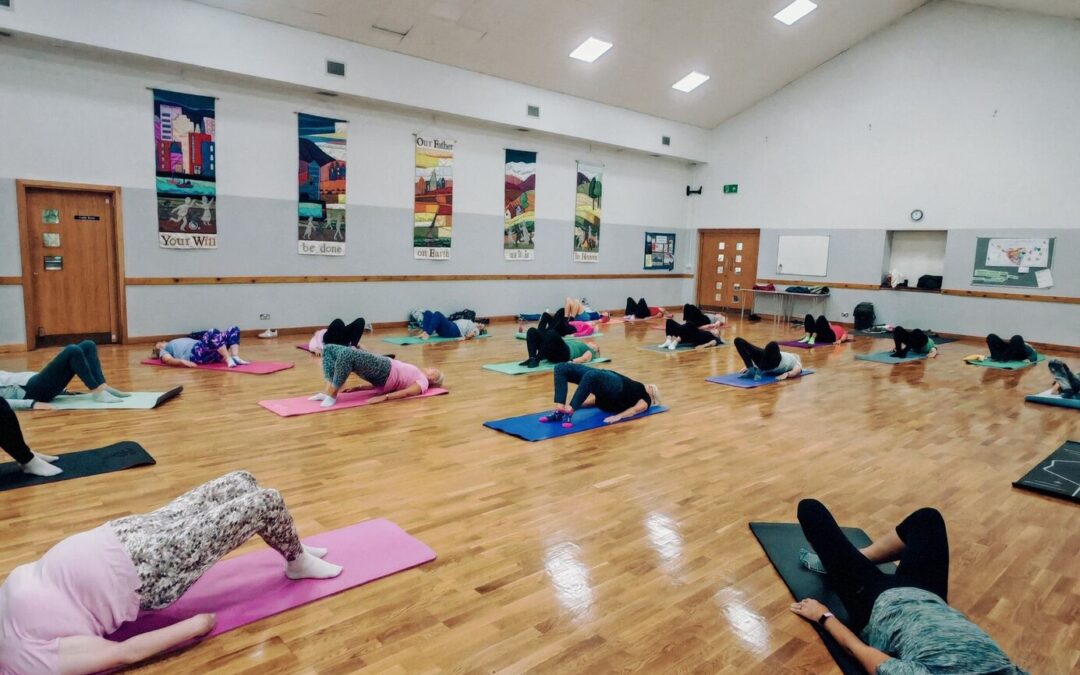
These are the kinds of movements I use in Fitness Pilates for clients with OA. Start small, stay within a comfortable range and build up gradually.
| If your OA is in your… | Try these |
|---|---|
| Knees | Sit-to-stand from a chair; supported or shallow squats (deepen slowly over time); heel raises; bridges; side-lying leg lifts; standing balance work; slow, controlled knee bends and straightens |
| Hips | Bridges; standing hip extension; side-lying leg lifts; clams; supported squats; sit-to-stand; gentle standing hip circles; balance work |
| Spine | Pelvic tilts; gentle spinal movement within comfort; upper-back rotations; hip mobility; core stability work; glute strengthening; postural strength |
Arthritis UK notes that range-of-motion, strengthening and aerobic exercise can all play a useful part. A brisk walk, a swim or a bike ride alongside these works well.
There are no “banned” exercises
There’s no universal list of exercises you can never do with OA. Instead, think modify, adapt, progress.
Be a little cautious with:
- Forcing your joints to the very end of their range
- Deep bending if it clearly makes your symptoms worse
- Jumping or high-impact work before your body is ready for it
- Movements that flare things up every time you do them
- Kneeling for long periods if your knees are painful
- Quick changes of direction if your balance feels shaky
- Heavy weights before you’ve built strength and good technique
- Pushing through pain that’s sharp or keeps getting worse
And remember: an exercise that doesn’t feel right today isn’t an exercise you can never do.
Adjust the range before you give up on a move
Say squats feel uncomfortable. Rather than dropping them, try this ladder:
- Make the movement smaller
- Hold on to a chair or wall for support
- Slow the tempo down
- Do fewer repetitions
- Build strength over a few weeks
- Gradually go a little deeper
That’s how you keep the moves that matter for daily life, like getting up from a chair or climbing stairs.
Strength is your secret weapon
The stronger the muscles around your joints, the more freedom you tend to have in everyday life. Focus on:
- Glutes, quads and hamstrings
- Calves
- The small stabilising muscles around your hips
- Your core and postural muscles
The NHS recommends regular exercise that combines muscle strengthening with general fitness for people with OA.
Keep things moving, too
Alongside strength, build in gentle mobility for your hips, knees, ankles, upper back, spine and shoulders. Move through ranges that feel comfortable. The aim is easy, regular movement, not forcing flexibility.
What to do on a flare day
A flare doesn’t have to mean stopping altogether. Instead, dial things down:
- Lower the intensity or the resistance
- Use a smaller range of movement
- Do fewer repetitions
- Change position, for example seated instead of standing
- Choose more supported exercises
- Stick to gentle mobility
- Give yourself extra recovery time
Symptoms can swing a lot from one week to the next. Listen to your body, adjust, and come back to your usual routine as things settle.
The bottom line
Osteoarthritis doesn’t mean the end of exercise. It means exercising smarter: building strength, keeping joints moving, and adapting on the harder days. Done consistently, that can mean less pain, more confidence and more of the life you want to live.
If you’d like support finding the right starting point, get in touch at dm-fit.co.uk.
This article is for general information and isn’t a substitute for medical advice. If you have new, severe or worsening joint pain, speak to your GP or physiotherapist before starting a new exercise programme.
Sources
- NICE guideline NG226: Osteoarthritis in over 16s
- NHS: Osteoarthritis
- Arthritis UK: exercise guidance for osteoarthritis